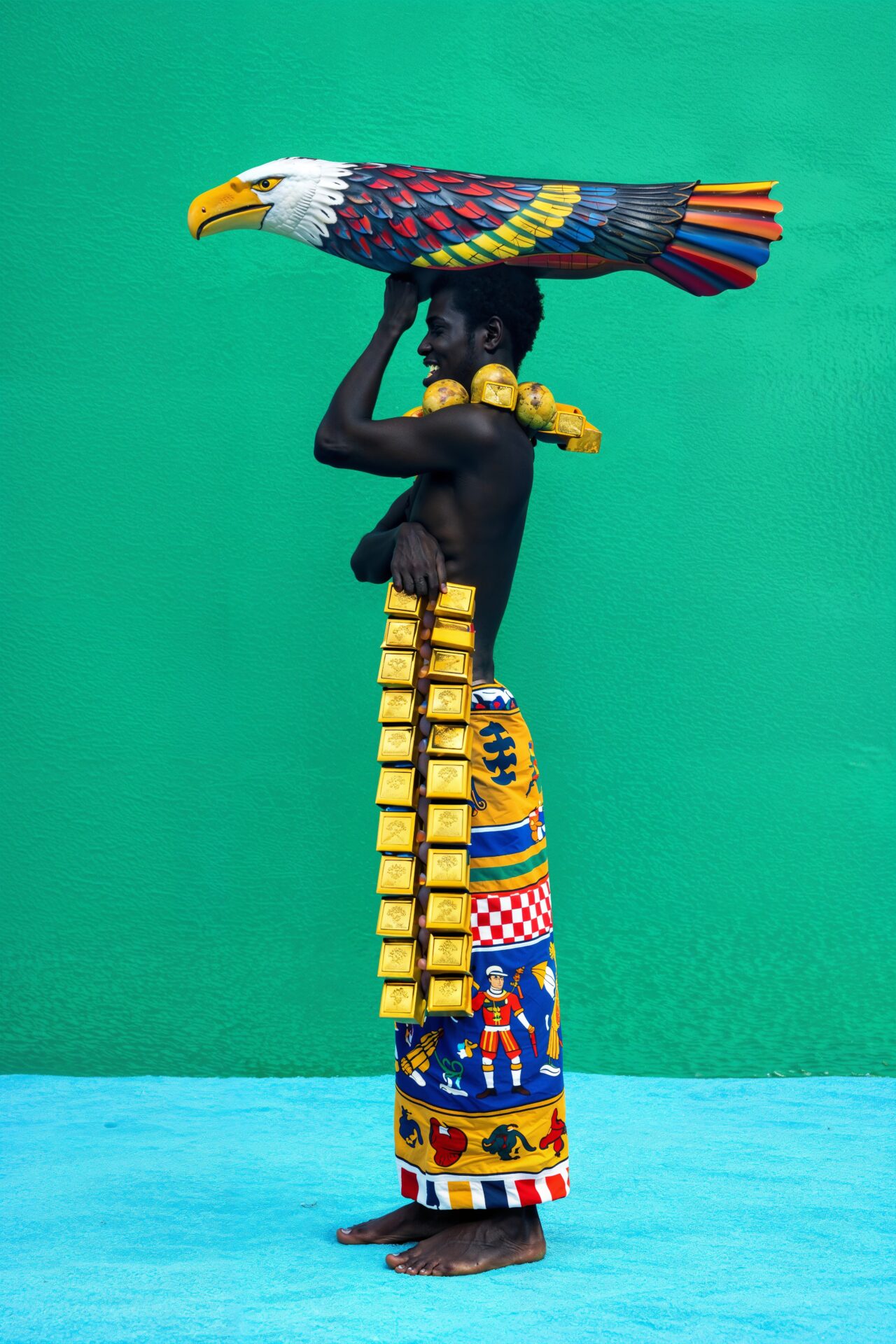
Archival Pigment Print on Hahnemühle Fine Art Paper
Proverb
“ Anomaa a ɔpɛ soro no, ɔsua mframa ano.”
The bird that seeks the sky must learn the direction of the wind’
An African prince walks forward balancing a powerful eagle across the head while carrying rows of gold along the body. The posture is steady and dignified, revealing a central Hueist idea: the higher the vision, the heavier the responsibility that follows it.
The eagle represents sovereignty and foresight. In Hueism symbolism, birds of flight carry perspective. They see beyond the ground and remind humanity that leadership requires vision before movement.
Gold bars cascade down the body like a chain of value. Wealth in Hueism is not only material, it is cultural memory, opportunity, and responsibility inherited through generations. What appears as abundance is also discipline.
The turquoise wall introduces calm stability. It grounds the scene while the eagle introduces aspiration. Hueism often pairs earth and sky in tension: growth must remain grounded even when ambition rises.
The body stands tall but relaxed. This posture reflects mastery. Hueism teaches that true strength does not shout; it balances. The ability to carry vision and wealth together requires patience, humility, and control.
The patterned cloth introduces lineage and narrative. It carries symbols of people, animals, and stories—reminding us that wealth without culture is hollow. Hueism insists that prosperity must travel with identity.