INTERVIEW
Your practice is described as an exploration of rhythm: in nature, sound, and the city. How does rhythm guide your process in the studio?
When I paint, there’s a back-and-forth movement between quick, impulsive gestures and slower, more careful marks. It becomes a kind of dialogue between urgency and stillness. That contrast feels alive to me. It’s also quite performative – my whole body is involved. I’m responding instinctively to sound, to memory, to whatever rhythm I’m picking up from the world around me at that particular time.
You often work in a flow state, painting to music. How does sound influence your gestures or decisions on the canvas? Does the music shape the mood, tempo, or even the structure of your compositions?
Music’s always been a huge part of how I paint. In the past, I used to borrow colours from recordsleeves, but now music functions for me in a different way. It steadies my thoughts and allowsme to slip into that flow state, where things start to feel instinctive. In that state, painting becomes almost like strumming a guitar: the rhythms I hear translate directly into movement – into the speed, direction, and pressure of my brushstrokes. I often think about Stanley Whitney’s work – how he plays with rhythm and colour like a jazz musician improvising.
Your paintings balance spontaneity with precision — they feel both intuitive and deliberate. How do you navigate that tension between control and release while you paint?
I tend to paint in short quick bursts – intense, fast moments followed by pauses to step back and see what’s happening. I might have a notion of the look of a painting as I start, only for it to look completely different at the end.That shift becomes the most exciting part. That unpredictability keeps me excited, not knowing exactly where it’s going to go. An artist friend once told me that Philip Guston used to paint his abstract paintings really close to the canvas, without stepping back to look. I love that image – I’d also find that impossible to do – I spend more time looking at my painting than I do painting on it.
This is the question: Light seems to play an emotional role in your work, from the glow of music venues to the softness of daylight. How do you think about light when you’re painting — as subject, atmosphere, or feeling?
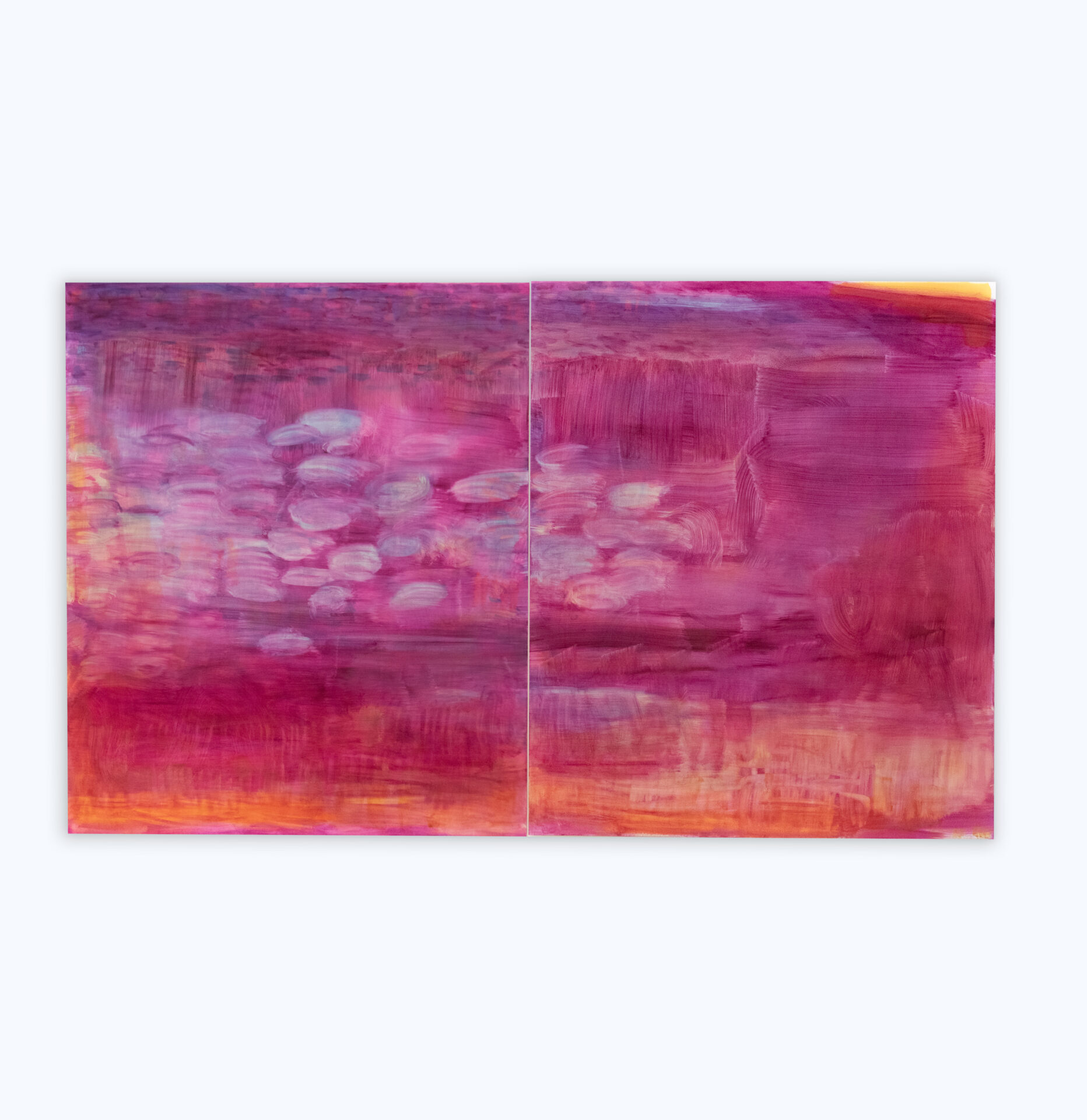
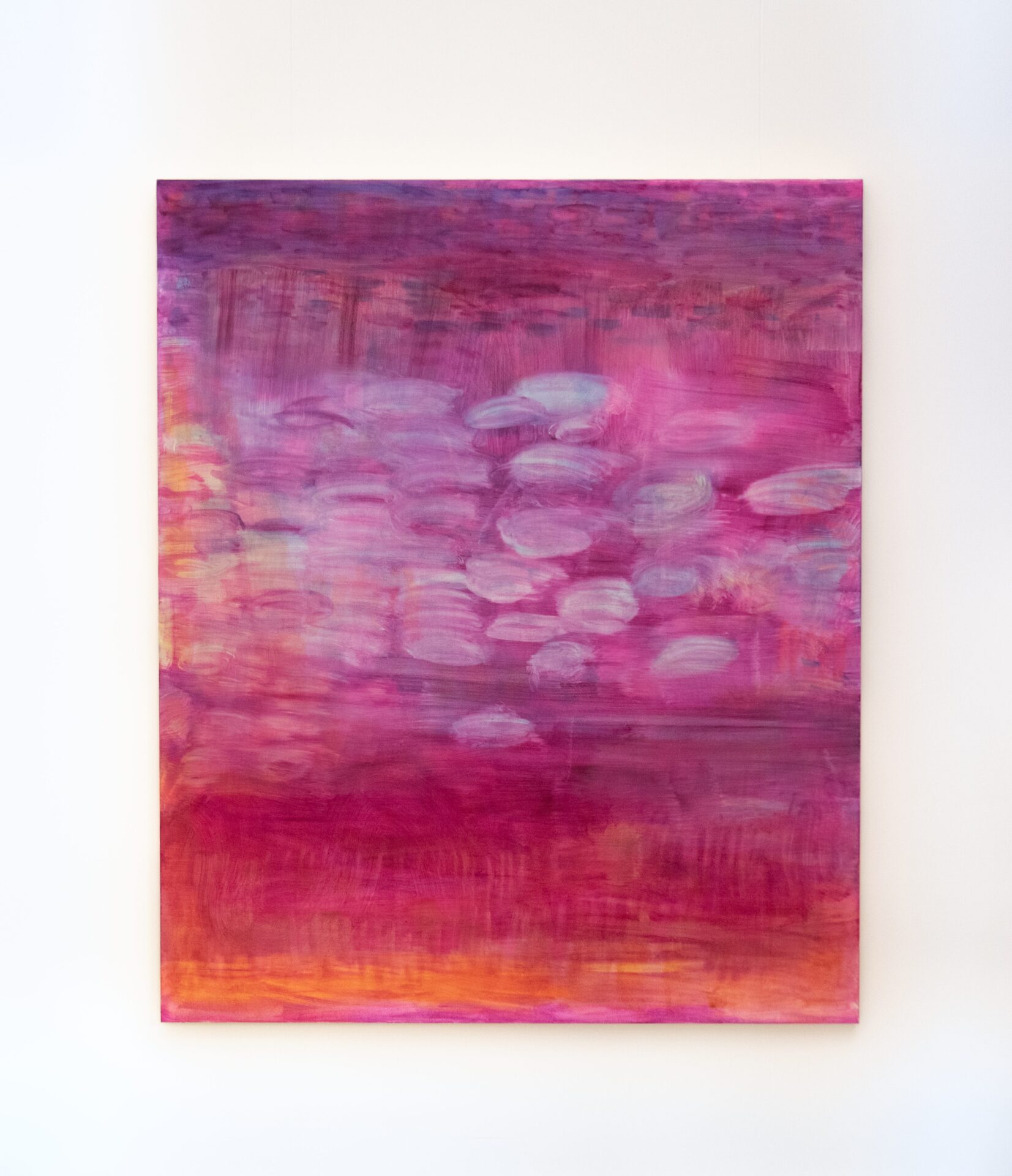
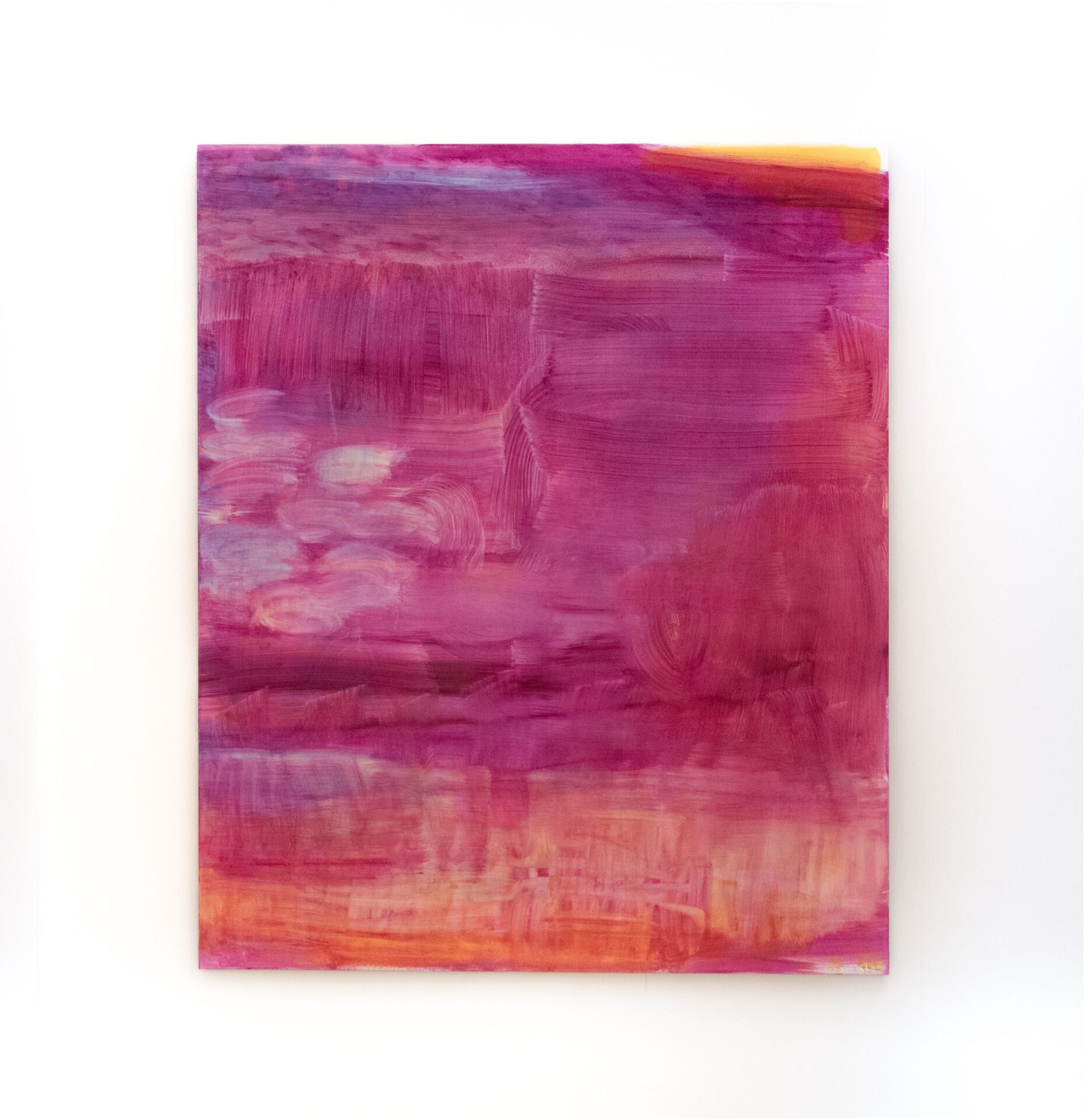
For me, light is more a feeling than a subject. I think of it as something that moves through the painting, rather than something I’m trying to depict literally. I often let bits of the underpainting shine through – little glimmers that keep the work alive and prevent it from feeling overworked. Recently, I’ve been experimenting with different kinds of light, both natural and synthetic. I’ve been using fluorescent paints to explore how they shift the energy of a piece. My fascination with light comes largely from music and performance. I’ve attended live gigs for as long as I can remember, and I think I’m trying to capture that feeling – the sense of a place or moment that has made me feel alive, or that has moved me.
Many of your works are titled after songs or lyrics. What is it about that intersection between sound, language, and image that draws you in?
I pretty much always have song lyrics stuck in my head. One of my greatest influences, Mary Heilmann, said something I really love – that her thinking has always been inspired by popular music, and so many of her titles come from songs she’s loved. I completely relate to that. A lot of my titles come from songs that were important to me while I was working, or lyrics that stuck around in my head for days. It’s also a way of marking time – remembering where I was in my life by what I was listening to. Each painting ends up feeling like a kind of record – not just of
the work itself, but of that specific moment…and that piece of music will take me back to a particular day, feeling or event.
read more about Rebecca her practice